
When people think of British afternoon tea, many likely imagine sandwiches, scones, and cakes arranged on a three-tiered stand, along with delicate teacups.
In fact, afternoon tea is not merely “tea time,” but a cultural reflection of life in 19th-century Britain. Let’s take a closer look at that aspect.
Afternoon Tea Was Born from “Hunger”
The origins of afternoon tea date back to the aristocratic society of the Victorian era in the mid-19th century.
At the time, the upper class typically ate two meals a day—lunch around noon and dinner after 8 p.m.
To fill the long gap of hunger between meals, Anna Maria, the Duchess of Bedford, is said to have requested “tea and light refreshments in the afternoon,” marking the beginning of the custom. (She is also the lady depicted on the famous afternoon tea label.)
She soon began inviting friends, and the practice spread as a social gathering. When Queen Victoria adopted it, it became a trend among high society.
By the late 19th century, it had spread to the middle class and became established as a symbol of British culture.
Afternoon Tea as a “Women’s Social Culture”
For upper-class women of the time, there were limited opportunities to be active outside the home.
Afternoon tea was one of the few occasions for social interaction—inviting friends, exchanging information, and showcasing fashion.
In the 1880s, women would change into dresses, wear hats and gloves, and gather for tea between 4 and 5 p.m.
In other words, afternoon tea was also a time when women could take center stage.
Why Beautiful Teacups Were Created
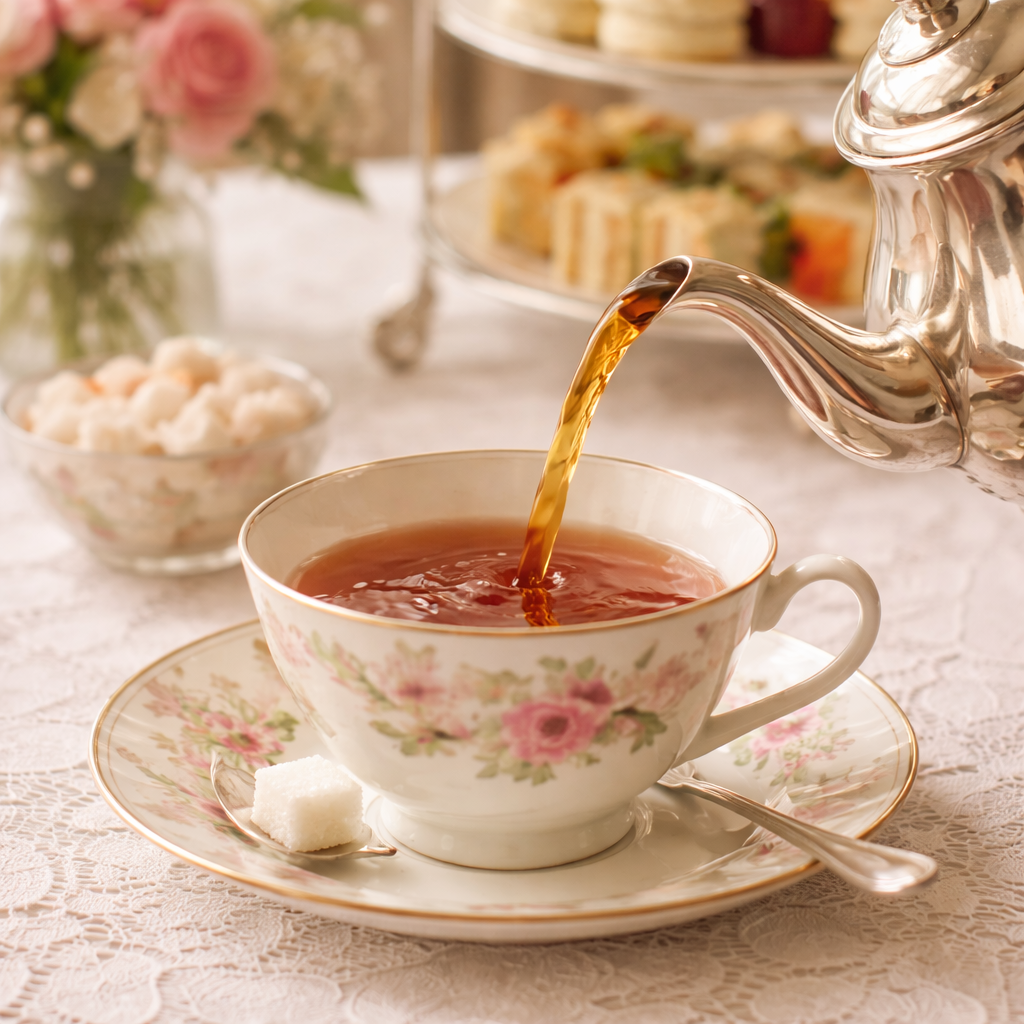
When you look at antique cups and teapots, their delicacy is striking.
This is because tea was not just a beverage, but a symbol of status.
Tea, introduced from China in the 17th century, was initially a very expensive import enjoyed only by the upper class.
As a result, fine porcelain teacups, silver teapots, and decorative cake stands were created,
and “what kind of tableware was used to serve tea” came to represent a household’s refinement and wealth.
The Three-Tier Stand as “Victorian Practicality”
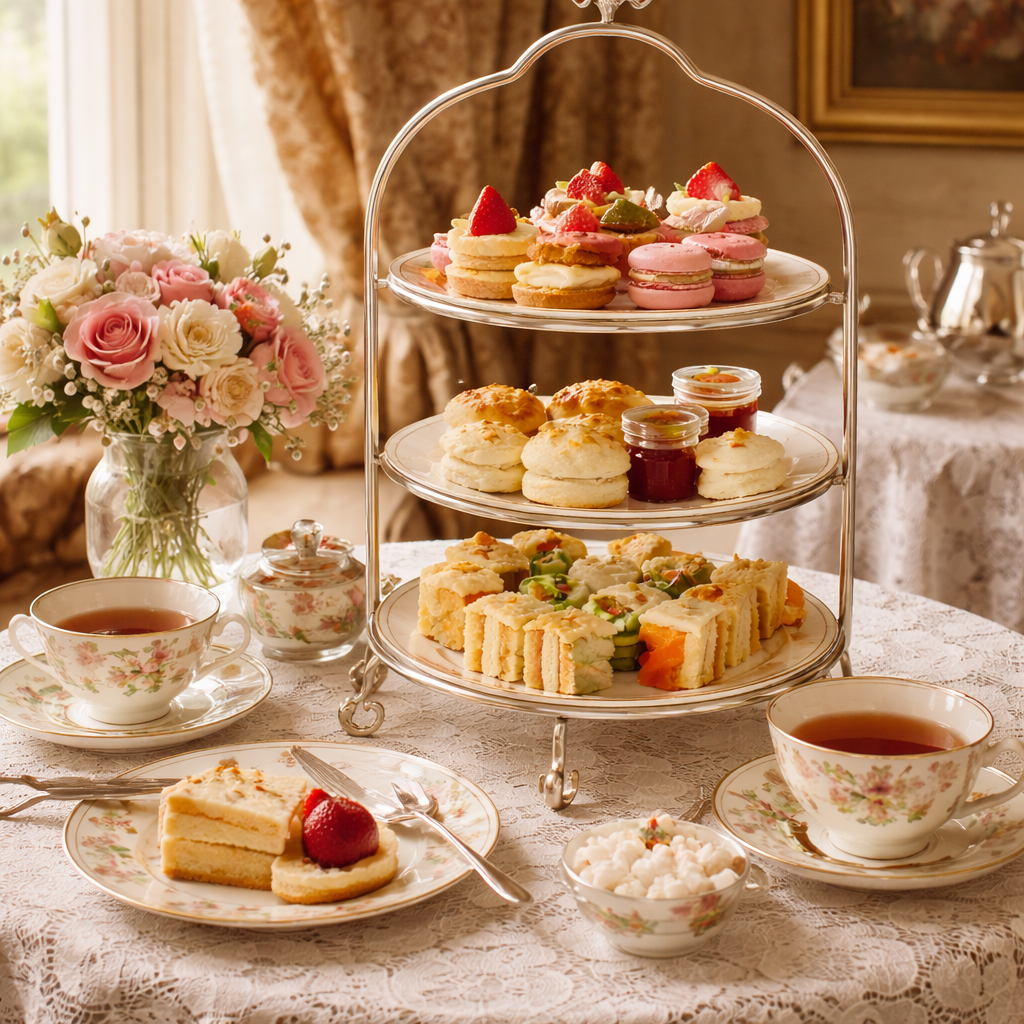
The three-tier stand also became widespread during the late Victorian era of the 19th century.
At the time, it was customary to eat in the order of sandwiches (savory) on the bottom tier, scones (middle) in the center, and cakes (sweet) on the top.
The structure of the three-tier stand made this sequence visually intuitive.
In other words, its form is not just about visual elegance, but a reflection of the culture of how the food is enjoyed.
Traces of Tea Time in Antiques
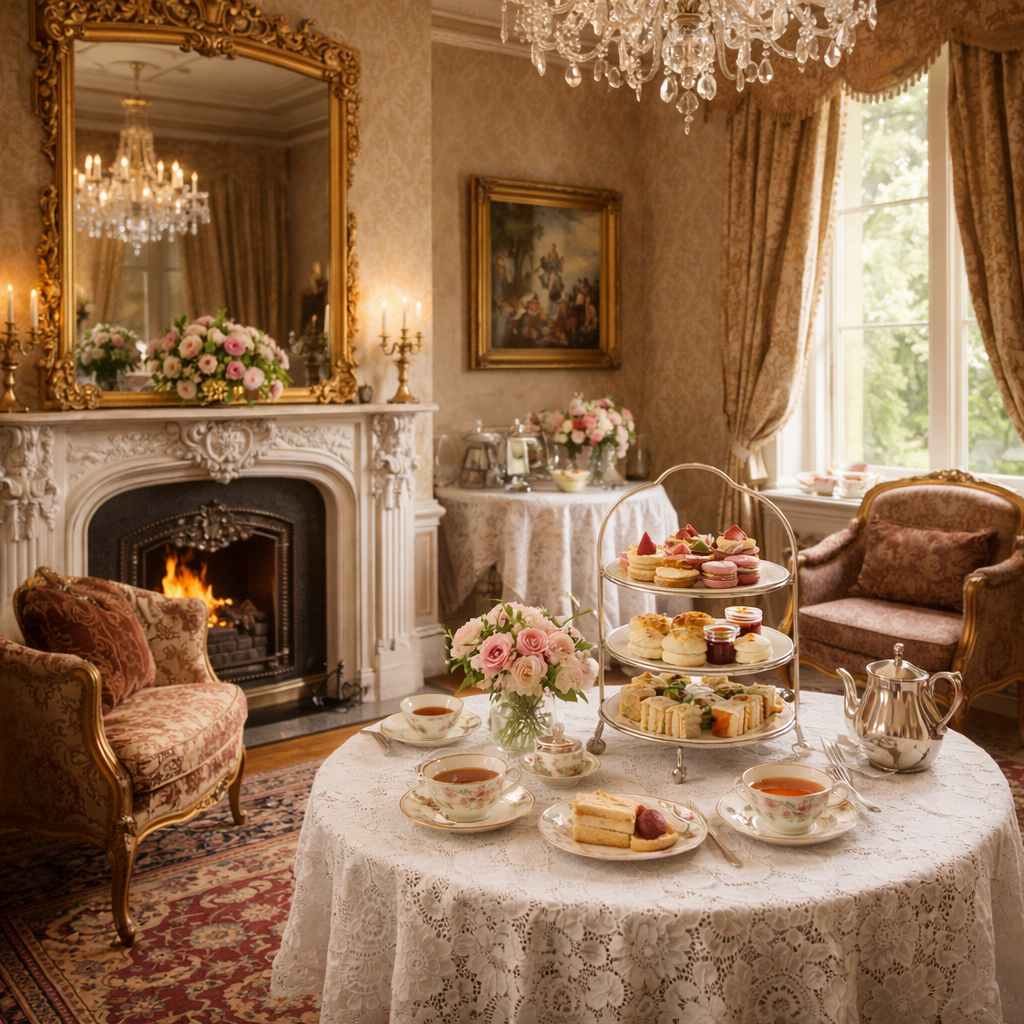
Among the items found in antique shops, tea sets, side tables, bentwood chairs, and small sofas particularly evoke the culture of afternoon tea.
For example:
・Thin, lightweight bone china cups
・Small tea tables
・Easy-to-carry trays
・Light, comfortable chairs suited for women to sit in, etc.
All of these were tools created for the social hours of the afternoon.
Furniture and tableware were not merely decorative, but essential elements that supported the rhythm of daily life at the time.
Commonalities with French “Salon Culture”
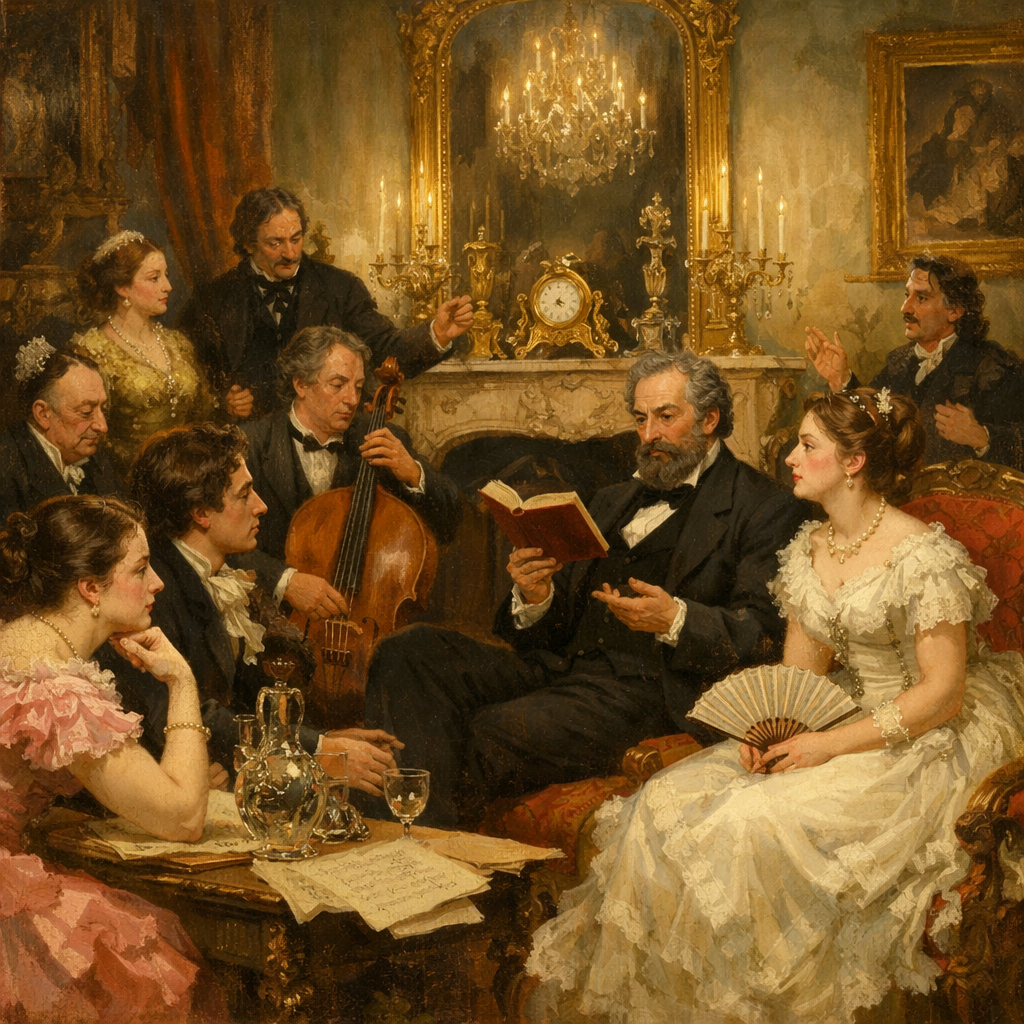
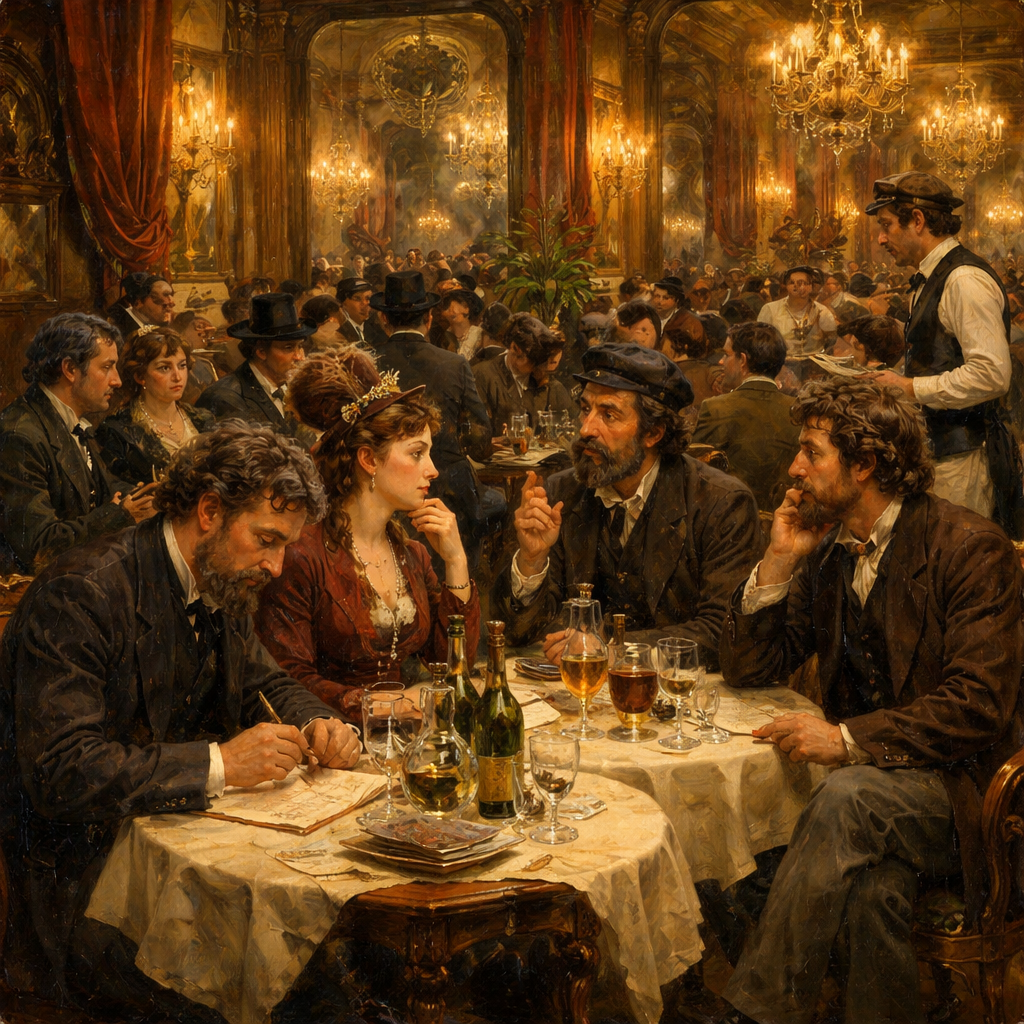
In France, there was also a “salon culture” hosted by women from the 18th to 19th centuries.
There too, what mattered were beautiful tableware, light sweets, and time for conversation.
In that sense, British afternoon tea and French salons are very similar as cultures born from women’s social spaces.
Looking at antique tableware and furniture, you can feel that, regardless of country, people valued time spent gathering, conversing, and relaxing.
Afternoon Tea as an “Aesthetic of Living”
Today, afternoon tea is often seen as something to enjoy at hotels or on special occasions, but originally it was a very simple custom:
“a cup of tea and light refreshments in the slightly hungry afternoon.”
Over time, it combined with beautiful tableware, comfortable spaces, and moments of conversation, evolving into a culture that symbolizes British life.
Antique teacups and furniture seem to quietly hold the memories of those afternoons even today.